
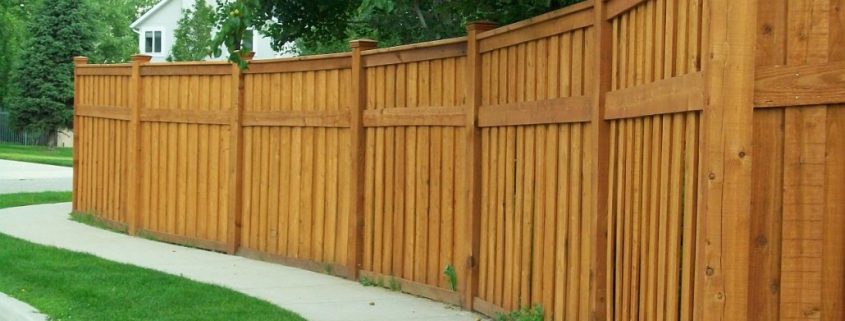
fences-2

Building a bamboo fence

Bamboo fences can bring an appearance of the East to your yard back. Bamboo is durable and weather resistant, and its color and natural texture complement almost any landscape. The best part is you can put up a bamboo fence simply by following these steps.

Instructions

  1. Digs holes that measure 1 foot (0.3 meters) deep and at least 4 feet (1.21 meters) wide, using a whole digger or shovels
  2. Insert bamboo poles into the holes; use a string to ensure that the caps are properly balanced. Pack down the post holes after filling.
  3. Mark the side of the posts at intervals of 6, 12 and 24 inches (15, 30 and 61 centimeters) from the top. Drill pilot holes through the posts at each mark to prevent the bamboo splits.
  4. Attach a drill bit to your drill and drill the holes. When the bit is in the hole, increase the speed slowly and go completely through the post. Repeat for each post.
  5. Hammer the posts about 24 inches (60 cm) into the ground to secure them.
  6. Use short straight stems for cross beams that match the dimensions of the bamboo fence. One additional inch (2.54 cm) of bamboo should be allocated to insert ½ inch (1.27 cm) into the post. Once you know the position of each piece, drill a ½ inch (1.27 cm) hole in each position.
  7. Insert studs and when they are placed, rotate them in both directions. Stick it to the post with an adequately long nail, penetrating the post. Avoid hitting the nail or the bamboo may break. If you have trouble installing a cross beam, enlarge the hole with a wood file.
  8. Add vertical rods. Use a string to make sure they are level.

Tips & Warnings

  • The addition of a vertical pole is optional. It is mainly used to provide a more finished look; it does not improve the structure of the bamboo fence.
  • Never screw directly on bamboo; use a drill and nail driver.
  • Use gloves to avoid splinters.
  • Apply petroleum or natural preservatives.
  • Bamboo poles vary in color, righteousness, cracking and joint position. Count on that in your design.
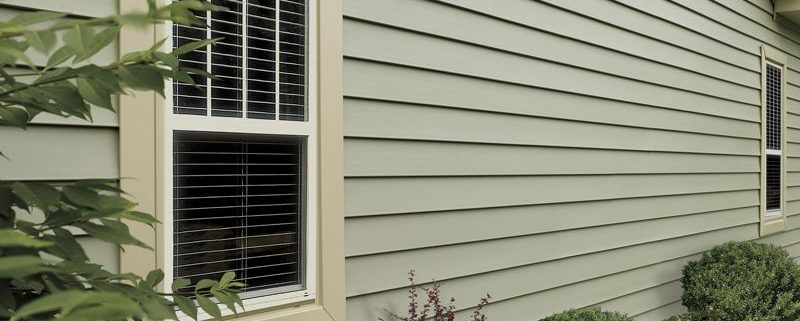
siding-6

Interesting Materials to Use for Siding

The siding of any building is the first part most people see when they approach your property. Choosing the right siding material is therefore important as it allows you to achieve the look you want.

Certain factors come into play when choosing siding. These include:

  • Aesthetic versus durability

Aesthetics is one of the factors that you need to consider.  But even more importantly, you need to consider whether the material you’ve chosen will be durable, resist water, install easily and if it’s versatile. This is because the most important function of siding is to offer protection to the building’s occupants and property.

  • Budget

Choice of siding also has to do with your budget. Not all siding material is created equal and for this reason, some materials are more expensive than others.

  • Climate

The climate of an area will also influence your choice. Locations close to the sea, areas prone to hurricanes and blizzards or geographies with high humidity will all have varying effects on different siding material.

  • Style

Additionally, certain looks can only be achieved with specific siding material. If you want to paint your house for instance, wood siding might be a more reasonable option. Nowadays though, it’s not uncommon to find designs that incorporate different types of siding on the same building. For instance, wood can be laid side by side with vinyl or bricks.

With that said, the following are five types of siding material to choose from when building your house:

  1. Vinyl siding

It’s low cost and easy to maintain and is therefore quite popular among many people. Though some might find that it tends to have a ‘plastic look’, there are varieties that are made to resemble real bricks or wood. Vinyl is also very customizable as it comes in a variety of styles and colors. Additionally, vinyl is not prone to moisture penetration therefore you won’t have to worry about mold.

  1. Wood siding

Wood is one of the best building materials for achieving a rich cottage-like look. However, to maintain its appearance, you need to periodically paint or stain it to protect against moisture and dust. Insects and rodents find it easy to bore into wood, therefore you have to be vigilant and exterminate rodents or prevent their attacks.

There are various types of wood siding such as clapboard, which are planks of wood that are installed to overlap each other horizontally. Other varieties include shingles and shakes. If you want to give your house more character, shingles are a better option as they come in different shapes and sizes which can be installed in interesting designs.

  1. Brick siding

Genuine bricks are made from clay and are baked in a kiln. Brick designs today tend to use veneers which are reinforced to wooden frames and stuck together with mortar.

Water can penetrate bricks, therefore it’s important to seal them and install insulation between the brick veneers and the house.

  1. Fiber cement siding

This is a low maintenance, termite resistant and fire resistant material that offers a great alternative to real masonry, wood or stucco sidings. It’s very customizable as it comes in a variety of styles, textures and colors.

  1. Stone siding

Natural stone is undoubtedly one of the strongest and most durable building material. However, it tends to be expensive and is an option for those who are not cost conscious. Stone veneers are a less expensive options to natural stone and can either be synthetic or natural.

Ducts/Air Vent Cleaning

Dirt Streaks Around Air Vents and How to Prevent Them

If you have air vents installed in your premises, you no doubt have noticed dirt streaking around them. The dirt streaks form ugly marks on walls and ceilings, especially when those surfaces are brightly colored. This will not leave a good impression whether in an office establishment or a residential building.

What’s worse, too much dirt streaks around vents and ducts can indicate that your whole air supply system is not working as it should. For this reason, dirt streaking should not be ignored. Cleanup should not only focus on the surfaces surrounding the air vents, but should also enter deep into your air supply system.

What could be causing the dirt streaking?

Usually trouble shooting the problem will reveal what is causing the dirt accumulation.

First, heavy dirt streaking on a new air vent and duct system could mean that the system is malfunctioning, the installation was not installed properly, or the quality of the air vent and ducts is poor.

Secondly, external environmental conditions could also impact how much dirt goes through your vents, such as if you live in a heavily polluted area. The interior of your room could also be to blame. If your building is dirty, you have dusty carpets, pets that shed fur or sources of smoke such as cigarettes and candles, this might cause faster accumulation of dirt in your vents.

Thirdly, air vents and ducts that are always working round the clock will have more air turbulence flowing through them per day, hence more dirt. For instance, you might find it impossible to air your house by opening windows if you live in noisy areas or areas with air pollution. In winter or hot summer, you have to keep your windows and doors shut, leaving air vents and ducts as the only air supply line.

Fourth, humidity in the room will influence how much the dirt adheres to air supply outlets.

Fifth, spaces around walls or floor boards at the duct entry points can cause the air being sucked into the vents to go in with dirt particles.

Lastly, if you don’t routinely get your air vents and ducts cleaned, then you should expect to see visible dirt streaks at the outlets.

How to resolve this problem

Cleanup of air vents and ducts should begin with locating what is causing the dirt.

  • Technicians should examine the ducts for leakage, spaces, poor quality material and proper installation. If any of these are the source, then repairs will be needed.
  • If the problem is coming from your room, such as if the room is dusty, the professionals might recommend thorough cleanup of the room. Dusty rooms are a hazard to occupants because ventilation systems disperse dust particles faster.
  • In commercial buildings, it’s advisable to install antismudge rings so that air is forced downwards as it exits the vents. This saves on the cost of cleaning up streaks from ceilings.
  • Regular and consistent cleanups performed by a professionally trained crew is important because all air ducts and vents will always accrue problems after a period of time.
fences-9

7 Key Benefits to Installing a Fence at a Commercial Business

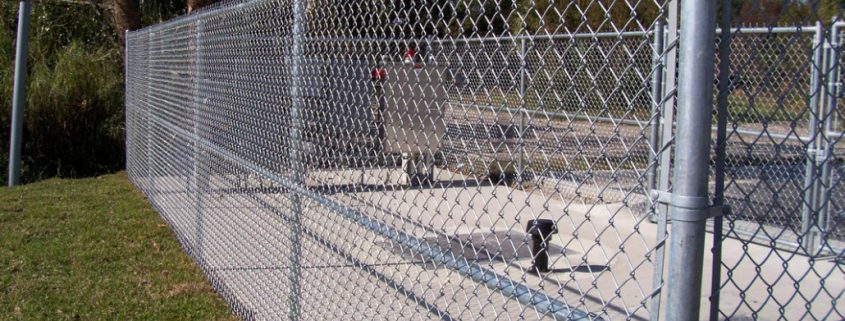
A fence can add a lot of benefits to a commercial property. Companies have a wide variety of fence types and material to choose from, depending on their customers, location and fencing needs. Wooden or brick fences are good for privacy, while if the aim is to keep people out, a chain link fence will meet your requirements. For instance, airports, commercial parking lots and junk yards tend to use chain link fences to keep trespassers out.

Regardless of whatever type of fence you choose, the following are benefits you should expect to enjoy if you install one around your premises:

  1. The boundaries of your property will be clearly marked

Knowing where your property begins and where it ends is very important. Boundary disputes can tend to get nasty and might even lead to expensive litigation if someone trespasses on your land, whether intentionally or accidentally.

  1. You will not have a problem with trespassers

A lot of people know that trespassing is a crime, but without a clear boundary, people will not know that they are trespassing. Without a fence, you will have to constantly be on the lookout for trespassers.

Additionally, you will not be to blame if anyone trespassing on your property gets injured. For example, if the trespasser gets attacked by your dogs while within the fence.

  1. A sense of security

Business premises are prone to vandalism and theft, especially at night when they are empty. You will sleep easier at night knowing that your investment is safely tucked in behind a secure fence.

  1. Control and restrict access

Businesses, such as research facilities or manufacturing plants, tend to limit employee and visitor access to certain parts of their premises. Fencing off a restricted area discourages anyone without access authorization to stay away from those areas.

  1. Increased privacy

Fencing in your business will ensure that your competitors don’t spy on your operations. As well, you’ll enjoy using your compound more if it’s fenced in. For example, if you want to create a common eating area outside, your employees will feel better using it if it feels private.

A fence also allows you to keep out unwanted visitors.

  1. Increased aesthetic appeal

A quality fence can make quite a statement about your company. It makes your business look professional, organized, neat and generally appealing.

  1. You will get more business

All the benefits discussed above indicate the type of business that people want to take their business to. If you’re offering security services for instance, but do not have a fence, you might not come off as business that knows a lot about that business.

kitchen-92

4 Steps to Help You Prepare for Kitchen Remodel

Remodeling a kitchen, or any room for that matter, is not an easy job. Unless you approach your remodel with specific guidelines in mind, you will be overwhelmed by the flurry of activities around you. So, the key to any successful remodel is to prepare thoroughly.

Below are basic steps to help you prepare for kitchen remodeling, particularly the first day of the project:

  1. Ensure you that all material and items needed to successfully complete the construction have been purchased and are onsite.

Many separate pieces have to be purchased. For example, you need water faucets, kitchen cabinets, appliances, tiles for your backsplash, floor tiles, etc.

Arrange all items in categories to avoid missing anything. For instance, for plumbing, you’ll need a checklist that includes faucets, piping, sink and other related items.

  1. Secondly, make sure that you and your contractor are aligned on what to expect for the kitchen remodeling

This is a two-way discussion. You might have a list of expectations but your contractor might not believe they are realistic. Start by discussing every aspect of the renovation and agree on what is realistic within the budget you’re working with.

Other factors that should be discussed are:

  • The expected length of the remodel
  • What you need to do to prevent unnecessary delays.
  • Dust and noise control.
  • Debris removal and cleanup expectations.
  • The sequence of work. That is, what part of the kitchen will they begin with and which part will they finish with?
  • Lastly, it’s polite to notify your neighbors that you’ll have a construction project going on so that you don’t give them a rude surprise. Setting up reasonable construction times to accommodate your neighbors might also be a good idea.
  1. Make sure you’ve emptied all the kitchen cabinets

Before construction begins, you need to remove everything that’s inside your kitchen cabinets. This might not be the most enjoyable task and you might indeed be dreading it. However, think of it as a chance for you to clean out and dispose of any clutter you don’t need.

To make it easier for yourself, arrange everything in an orderly manner so that it becomes easier to put it back when the renovation is completed.

  1. Set up a temporary area that you’ll use as a kitchen

Unless you intend to eat out every day and for every meal until the renovation is complete, you need to figure out which part of your house you can convert into a temporary kitchen.

Eating out can be expensive and if you have kids, it can be impractical because you never know when they’ll need something to eat. Even without kids, you’ll still need to make a quick snack every now and then.

A temporary kitchen can include a simple movable table, microwave, toaster, a hot plate, and a few items for food preparation such as a chopping board and knife. To make cleanup a lot easier, buy some plastic plates and cups instead of using your usual cutlery.  You’ll also need a few storage containers for food leftovers, though it might be a better idea to only cook what can be eaten in one seating.

windows-and-doors-1

Different Types of Curtains for Windows

Curtains are the most popular type of window treatment for many reasons. Framing a window with fabric provides attractive aesthetics and are functional. Curtains can soften rigid lines, add color, and texture, give privacy and gently filter sunlight. There are many types to choose for your windows, from traditional favorites to contemporary.

Scalloped Curtains

Scalloped curtains create an appeal by gathering clasped fabric to give the look of scallops above the window. This treatment may have a header (fold) over the rod, or have no header. Scalloped curtains can have holes of 1 inch (2.54 cm) to 1/2 inch holes 4 (11.43 cm). They are one of the most popular types of curtains. These curtains can be purchased from any home decor store or can be tailored to any type of available fabric.

Curtains with Stitched Pleats

Curtains with decorative folds sewn as pleats are a traditional type of window treatment. The top panel is created with a series of folds that are equally spaced apart. These curtains can be hung by hooks or rings that hang around the rod. They can be hung under panels or on shutters for a complete look. An alternative for stitching the folds is the fold box. The pleated curtain can be attached behind the header box.

Curtains clips

The curtains with loops at the top enhance the beauty of decorative rods, since much of rod is seen through this type of window treatment. Loops or circles are sewn to the top of a flat panel and give a very contemporary image. The hooks can be made both of a fabric that matches or contrasting fabrics. These curtains come in wrinkled or plain versions. Fabrics made of any kind of weight are suitable for this type of curtain.

Cafe curtains

Cafe curtains are short panels covering half the length of the window. These curtains are hung from suspension rods and sometimes cover from the middle of the window, leaving the top of the window bare. Cafe curtains are popular for their simple, casual and clean style and are mainly used in bathrooms and kitchens.

powerwashing-5

Everything You Need to Know About Power Washing

Exterior walls take quite a beating from the sun, wind, rain and snow storms. Within a couple of years, you’ll begin to notice your exterior begin to develop all sorts of problems such as paint coming off, rusting, mold, gaps or spaces developing in the siding, accumulation of dirt and grime in spaces and surfaces.

You should not to leave these problems unattended. A power washing session is all your walls need to remove these blemishes and return the walls to perfection. Below is everything you need to know about power washing:

The benefits you get from power washing

Cleaning an exterior with soap and a brush is time consuming and impractical when you’re dealing with large areas such as walls. Not to mention, most cleaning items are not designed to reach into cracks and spaces, nor are they designed to blast dirt off surfaces.

With power washing, a professional will handle the cleanup for you, blasting away all dirt and hazards that are hiding in nooks and cracks.

How often your exterior needs to be power washed

Different factors will determine how often you need to power wash the outside of your home.

If your location is humid, mold, mildew and lichens are more likely to accumulate on your walls faster. Therefore, you’ll need to power wash more frequently.

If you live in an area that gets heavy storms, you might need to power wash after every storm because dirt and bits of vegetation will be blown into spaces within the walls.

Additionally, if you have a lot of plants in your yard, such as trees that are close to your roof, you might need to power wash frequently. Pest infestation is also another factor that will determine how often you power wash.

In a nutshell, the most advisable thing to do is to perform routine checkups on your exterior walls every few months and call in professional power washers if you are not pleased with the appearance of them.

The safest time to power wash your walls.

Power washing uses water and as you know, water accumulation on your walls is never a good thing. You should therefore choose a time of day and year when it’s sunny so that water can dry off quickly.

Choose the season wisely. For example, in autumn all your trees are shedding leaves and even after you power wash, the leaves and dirt from them will be blown right back on.

Only a professional should power wash your property

Power washers use a lot of pressure. There’s a risk of damaging your walls or injuring yourself if you give the job to someone who’s not trained in using the equipment.

Power washing damaged walls will not fix your problem

There’s a point where you have to admit to yourself that your walls are damaged beyond repair and need to be replaced. If your siding is deteriorated, the pressure from a power washer will only make things worse.

concrete repairs

How to Calculate Cubic Meters of Concrete

The calculation of the cubic meters of concrete to pour into a framed area is easy. By following these simple steps, you can find the required amount quickly and with little chance of over or under estimating the amount needed.

Instructions

How to calculate cubic meters of concrete

  1. Measure the length and width of the area where concrete will be poured in feet and inches. If the area is not a simple square or rectangle, divide it into sections to allow it to be measured as close as possible to a rectangle. For example, if you are trying to place a concrete slab that is 30 feet (9 m) long but changes its width 10 feet (3 m), you might chose to measure the area in a series of rectangles 10 feet long by 20 feet (6 m) wide, 10 feet long by 15 feet (4.5 m) wide and 10 feet long by 10 feet wide.
  2. Measure the depth of the area where the concrete will be poured in feet and inches. If you have multiple sections in Step 1, measures the depth of each section. Using measurements of the sample in step 1, the grouping of the numbers might look like this: 10 feet (3 m) long by 20 feet (6 m) wide by 6 inches (15 cm) deep, 10 feet long and 15 feet (4.57 m) wide by 6 inches deep and 10 feet long by 10 feet wide by 6 inches deep.
  3. Multiply the length by the width by the depth of each section. If you have different sections, add the results of each equation to arrive at a total number. This total is your total cubic feet. The total number of cubic feet of the sample would be 225 cubic feet (6.37 cubic meters).
  4. Divide the total number of cubic feet to be cast by 27, which will give you the number of cubic feet in a cubic yard. In this example, 225 cubic feet (6.37 cubic meters) divided by 27 is equal to 8.33. You have 8.33 cubic yards (6.37 cubic meters) of concrete that will be poured in this example.
  5. Finally, convert your cubic yards to cubic meters by multiplying the cubic yards by 0.764554857992 (the amount of cubic meters in a cubic yard). The total number of cubic meters at you will need in this example is 6.37 (rounded to the third decimal).

Tips & Warnings

  • Add 10 percent to the total cubic meters of concrete you will need. This will cover the loss of concrete pouring and make sure you have enough.
  • Always check your original measures. Be careful when working with concrete and around. Do not let them come into contact with skin or eyes, keep a first aid kit nearby and use personal protective equipment.
fences-7

How to Build a Cane Fence

Reed fences are a good way to add a simplicity and give some personality. Due to the construction of the cane, they are very good as private fences and to keep small pets and children in a designated area. Reed fences come in full or half cane. These fences come in standard rolls or are prefabricated in different lengths and heights of 4 to 6 feet (1.22 and 1.83 m). This type of wall is available in most home improvement stores, lawn and garden and hardware stores.

Instructions

  1. Choose the type of fence you need and determine the height of the cane. Measure the area to be fenced with a tape measure so you know the exact amount needed to buy. Place stakes with a line of rope wrapped around them to show the line of the new fence.
  2. With a shovel dredge holes about every 6 feet (1.83 m) along the chord line. Dig the holes 6 inches (15 cm) deep and about 6 inches (15 cm) in diameter. Fill 2 inches (5 cm) of the hole with crushed gravel.
  3. Place a 7 foot (2.13 m) metal post in the center of the hole and placed four good size stones around to keep it in place in the hole. Check the post with a level.
  4. Mix water and concrete mixture in a large bowl until it has the consistency of porridge. Fill up the hole with concrete and smooth it with a metal blade. Repeat these steps for all other posts and allow to dry overnight.
  5. Unroll cane in front of the posts. Check for damaged areas and that all rods are still securely attached.
  6. Raise the fence and place it against the nearest post. Cut garden mesh with wire cutters and wraps through the upper end of the fence. Also wrap it around the top of the pole and then tie the two ends together with pliers. Repeat this for the bottom and about half way up the pole. Check that all three connections are secure.
  7. Firmly put on and connect the next pole in line with the same number of connections as the first. Repeat this with all poles. If you’re going to join pieces of the fence double the number of wire connections so the connection is strong.

Tips & Warnings

  • The plastic slips also function as the cable, but don’t look as good.
  • Have someone help hold the fence in place while they affixed to the posts.
  • For windy areas, consider adding two half joints instead of only one space.
  • Beware that the fence is not damaged while working with it. It becomes stronger when connecting to the post and most of the damage occurs during construction.
windows and doors installation

Different types of window treatments

The curtains are the type of treatment for most popular windows for many reasons. Frame a window with fabric provides attractive aesthetic and functional. Curtains can soften rigid lines, add color, and texture, colorful landscapes little block, give privacy and gently filter sunlight. There are many types to choose curtains for your windows, from traditional favorites to contemporary.

Curtains barrel

Barrel curtains create an aesthetic gathered clasping curtain fabric in barrels above the window. This treatment may have a header (fold) over the rod, or having no header. Barrel curtains can have holes of 1 inch (2.54 cm) to 1/2 inch holes 4 (11.43 cm). They are one of the most popular types of curtains. These curtains can be purchased from any vendor of home decor or can be tailored to any type of fabric available.

Curtains with stitched pleats

Curtains or curtains with decorative folds sewn pleats have on top. They are a traditional type of treatment for curtains. The header is created with a series of folds that are passed through barrels. They can be hung by hooks or rings of said Barrel. They can be worn under skirts or on shutters for a complete treatment. An alternative for stitching fold is the fold box. Headers box pleat curtain folding upon itself in the total length of the curtain.

Curtains clips

The curtains with loops at the top enhance the beauty of decorative barrels, since much of barrels seen through this arrangement header window. Loops or circles fabrics are sewn to the top of a flat panel and give a very contemporary image. The clips can be made both of a fabric that matches or contrasting fabrics. These curtains come in wrinkled or plain versions. Fabrics made of any kind of weight are suitable for this type of curtains.

Cafe curtains

The cafe curtains are short panels covering half the length of the window. These curtains are hung from barrels suspension or coffee from the middle of the window, leaving the top of the window naked. The cafe curtains are popular for their simple, casual and clean style in bathrooms and kitchens. The cafe curtains can be combined with one side (window topper) for a cohesive look.